Negotiation Success Range (NSR)™: Understanding Walkaway Positions so Neither Side Walks Away
Winning Negotiations Strategy

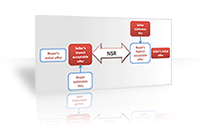
One of our tools for helping clients prepare a winning negotiations strategy is the Negotiation Success Range (NSR)™, which identifies the conditions under which both parties will be satisfied. And if those conditions satisfy both sides, but our side likes them more than theirs? That’s OK: A winning deal is never perfectly even. In business, especially when forging long-term relationships, the NSR is critical because the deal should work for both sides, and both sides need to feel like they have won.

This is easier said than done. As an example, during negotiation planning the seller’s price and the buyer’s cost are often crucial factors in the deal. In fact, price is often a deal maker or a deal breaker. (The impact of price considerations on your deal can be ameliorated with value articulation.)

While the NSR example we’ll discuss relates to price, the tool works with any negotiation term that has a range. Read more

The Value of Role Playing in Negotiation

We have had the privilege of assisting major companies all over the world with our Win Wisely™ approach to negotiation. The principles we teach are far from theoretical: they were forged from practical experience gained in all kinds of negotiations involving all types of participants. This includes everything from basic buy-sell transactions to complex, high-stakes negotiations in business and technology conducted by lawyers, salespeople and executives. Each of them needed a methodical approach to forging better deals.

We routinely hear from our clients. They describe how the teams we have trained are able to put their learning to immediate effect. Read more

Misusing Leverage: The High Cost of a Short-Term Negotiation “Win”

Do repeat business assumptions count in your business plan? If so, the way you conduct your negotiations takes on much greater importance.

Some view negotiation as a series of devious games and ego contests conducted to gain advantage by keeping the other side continuously off balance, intimidated or flustered. We find this approach to negotiation quite short-sighted if your “win” leaves the other side angry, resentful and questioning your credibility. Who wants to do more business with someone who makes them feel as if they have been bullied or tricked? The logical response will be to aggressively seek an alternative the next time around, whether you are a buyer, seller or “business partner.” That doesn’t sound like much of a win to us. Read more

Negotiation Blocking Techniques

In one sense, negotiations are a strategic exchange of ideas and information. But the value of what information we give (and when) can have a very real bearing on our success.

As you seek leverage in the deal, you are trying to find key information from the other side. If you’re negotiating with seasoned professionals, you can expect them to do the same with you. Sometimes difficult questions arise that, when answered, could erode your position. For example, if you have few or no real alternatives to doing an important deal, revealing that fact to the other side can cost you dearly. That’s why experienced negotiators have a handful of practiced blocking techniques they use when they feel a certain question must be deflected. As always, consider your purpose, audience and personal style as you decide how, and when, to use any of these strategies. Read more

International Negotiation: Using the MID™ to Cut Confusion

“We must have a 10-day shipment guarantee.”
“This functionality is a must.”
“A price reduction is mandatory.”

How often have you heard conditions like these during a negotiation? Sometimes negotiators make every request sound as if it were mandatory. But what are the real deal-breakers? K&R’s MID™ is designed to help you identify and prioritize the issues in any negotiation. Using the MID, you can separate and deal with the truly mandatory goals (or ends) while reducing conflict over issues that may not be mandatory. The MID approach makes deals easier to close. Read more

Negotiation in Sales: Presenting the Value Argument that Wins in Highly Competitive Conditions

With pressure to meet earnings and revenue targets, expand new markets and make the most of every resource, today’s global sales force is the difference between success and failure. Communication and online information are leveling the playing field, creating an extremely competitive environment and shrinking margins.

Even the best products are one development cycle away from being leapfrogged in the marketplace. Competing on price is the path to becoming commoditized and to being robbed of the ability to present a unique value proposition. Ultimately, it’s your sales people—and their skills and experience—that will help you differentiate yourself, your solutions or your company in a highly competitive selling environment. Read more

International Negotiation: More About Preparing to Win

In our previous post on international negotiations, we discussed the critical importance of preparation and gathering facts. You can’t control all the factors, but you can control your knowledge base. The bigger that base is, the higher the chances for success.

As noted before, your charge as an international negotiator is to conduct thorough background work on everything that could impact your potential deal. This includes trying to account for cultural influence on business behaviors, regulations unique to that country, and more. Here we will suggest information sources that will widen your knowledge base and make you a more credible negotiator. In some cases, access to these sources may be limited due to considerations of distance or protocol. Read more

International Negotiation: The Facts and The Culture

We once assisted a Japanese client company (we can call them “Friendly”) in negotiating a strategic alliance with an American company (whom we will call “Abrasive”) that had a reputation for being challenging. Prior to our meeting, we contacted a colleague who had done business with Abrasive. Our friend warned us that the lead negotiator would be very confrontational.

Understanding that our clients at Friendly were inclined to maintain harmony, we discussed the potential problem with them beforehand. We asked them to let us handle any adversarial moments.

Not long after negotiations began, the lead negotiator for Adversarial announced, “We are going to use our contract, and if you don’t like it, you can leave!” Read more

Six Principles Every International Negotiator Should Know: Terms Cost Money; Someone Pays the Tab

This is the ninth post in a series entitled: The Principles of International Negotiation: Finding Universal Value in a Complex World

Every term in contracts and negotiations should be of some value. And each term has an associated cost. As a negotiator, knowing the rationale for a term enables you to articulate the value and identify its cost. The value of the total deal is the aggregate impact of all the terms. If you don’t understand the rationale behind the terms, not only is your credibility impacted, but so is your leverage.

Suppose you are negotiating a private label distribution OEM (original equipment manufacturer) deal, representing the seller. The seller’s standard agreement has a term in the contract that states: “In the event any part fails within the warranty period, the customer may return the part at customer’s expense and supplier will send a replacement part within three business days.” Read more

Six Principles Every International Negotiator Must Know: Negotiation is a Continuous Process

This is the eighth post in a series entitled: The Principles of International Negotiation: Finding Universal Value in a Complex World

If you are skillful in building a good negotiation process, your negotiations with your client should never end because you’ll be doing repeat business.

If negotiations are a building block for successful relationships, then they must be seen as a form of interval training, not a single sprint. Since negotiation work can result in a long-term future (or no future), success in that work will create business relationships that make doing business easier and more rewarding for all parties. Read more