negotiation skillsDefine value, win credibility and respect at the negotiation table. Learn the key negotiation skills, including how to generate winning conditions, regardless of what is being negotiated, or with whom.

Below, you will find blog posts with insights into effective negotiation skills. And for a much more thorough discussion of negotiation skills, download our complimentary whitepaper “Negotiation Games: Spotting and Neutralizing Five Tactics that can Damage Deals”

K&R CEO Mladen Kresic Discusses Negotiation Know-it-Alls with Knowledge@Wharton Host Dan Loney

K&R CEO Mladen Kresic Discusses Negotiation Know-it-Alls with Knowledge@Wharton Host Dan Loney (Complete Transcript)

On Friday, May 20 K&R CEO Mladen Kresic joined Knowledge@Wharton (Sirius XM Channel 111) host Dan Loney to talk about how negotiators can keep “know-it-alls” from ruining their next big deal. (Kresic wrote on the subject in his 2016 white paper, “Dealing with Negotiation Know-It-Alls: How to Keep Instructors, Intimidators and Impostors from Derailing Your Deal.”

During this segment, Loney and Kresic discussed the three major types of know-it-all (The Instructor, The Intimidator and The Impostor), the threats they represent to successful negotiations, and strategies negotiators can use to mitigate their negative influence and keep their deal discussions on track.

This content reproduced courtesy of Sirius XM and Knowledge@Wharton.

Loney: Have you ever been part of a negotiation and feel like you’re hitting your head on a brick wall because the person on the other side is the “know-it-all”? It can be one of the most frustrating things to deal with, but there may be some hope. Mladen Kresic returns to the show. He’s the president and Chief Executive Officer of K&R Negotiations. He’s recently published a white paper on the problem and how you can handle the situation — and maybe even make it work for you. Mladen, the author of Negotiate Wisely in Business and Technology, is joining us on the show right now. Great to catch up with you, Mladen. How have you been? Read more

To Win the Deal, Add Personal Value to Your Negotiation Strategy

Effective, persuasive communication is fundamental to building winning deals. When you are understood and believed, you greatly increase your chances of gaining leverage and having your value argument accepted by the other side.


However, we make a mistake if our communication doesn’t recognize two kinds of value:


  • Company value to the other side
  • Personal value to the representative of the other side

You generate company value by making the deal beneficial to the customer’s organization. Read more

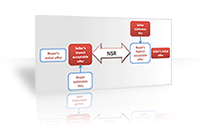
Negotiation Success Range (NSR)™: Understanding Walkaway Positions so Neither Side Walks Away

Winning Negotiations Strategy

One of our tools for helping clients prepare a winning negotiations strategy is the Negotiation Success Range (NSR)™, which identifies the conditions under which both parties will be satisfied. And if those conditions satisfy both sides, but our side likes them more than theirs? That’s OK: A winning deal is never perfectly even. In business, especially when forging long-term relationships, the NSR is critical because the deal should work for both sides, and both sides need to feel like they have won.

This is easier said than done. As an example, during negotiation planning the seller’s price and the buyer’s cost are often crucial factors in the deal. In fact, price is often a deal maker or a deal breaker. (The impact of price considerations on your deal can be ameliorated with value articulation.)

While the NSR example we’ll discuss relates to price, the tool works with any negotiation term that has a range. Read more

The Value of Role Playing in Negotiation

We have had the privilege of assisting major companies all over the world with our Win Wisely™ approach to negotiation. The principles we teach are far from theoretical: they were forged from practical experience gained in all kinds of negotiations involving all types of participants. This includes everything from basic buy-sell transactions to complex, high-stakes negotiations in business and technology conducted by lawyers, salespeople and executives. Each of them needed a methodical approach to forging better deals.

We routinely hear from our clients. They describe how the teams we have trained are able to put their learning to immediate effect. Read more

The Five Teamwork Principles to Follow for Winning Negotiations

Even with a well-crafted value argument and solid customer motivation to get a deal done, the whole process can unravel if negotiation leadership and teamwork are absent.  The most effective “tactic” in your arsenal is a unified team. Selecting your team, involving all key players in planning, and maintaining group discipline begin the teamwork  that will hold your important deal together.

In our decades of helping clients manage and win complex deals, we have seen five key teamwork principles that are critical to getting the win/win negotiation outcomes you desire.

1. Recognize Varied Motivations, Both Internally and Externally

Everyone has specific reasons for acting as they do. (For example, the other side may stall negotiations if they think you are in a revenue bind, hoping to extract price concessions.) Lay the necessary groundwork by considering both the organization-level and role-based motivations of the other side. Read more

Misusing Leverage: The High Cost of a Short-Term Negotiation “Win”

Do repeat business assumptions count in your business plan? If so, the way you conduct your negotiations takes on much greater importance.

Some view negotiation as a series of devious games and ego contests conducted to gain advantage by keeping the other side continuously off balance, intimidated or flustered. We find this approach to negotiation quite short-sighted if your “win” leaves the other side angry, resentful and questioning your credibility. Who wants to do more business with someone who makes them feel as if they have been bullied or tricked? The logical response will be to aggressively seek an alternative the next time around, whether you are a buyer, seller or “business partner.” That doesn’t sound like much of a win to us. Read more

Negotiation Blocking Techniques

In one sense, negotiations are a strategic exchange of ideas and information. But the value of what information we give (and when) can have a very real bearing on our success.

As you seek leverage in the deal, you are trying to find key information from the other side. If you’re negotiating with seasoned professionals, you can expect them to do the same with you. Sometimes difficult questions arise that, when answered, could erode your position. For example, if you have few or no real alternatives to doing an important deal, revealing that fact to the other side can cost you dearly. That’s why experienced negotiators have a handful of practiced blocking techniques they use when they feel a certain question must be deflected. As always, consider your purpose, audience and personal style as you decide how, and when, to use any of these strategies. Read more

International Negotiation: Using the MID™ to Cut Confusion

“We must have a 10-day shipment guarantee.”
“This functionality is a must.”
“A price reduction is mandatory.”

How often have you heard conditions like these during a negotiation? Sometimes negotiators make every request sound as if it were mandatory. But what are the real deal-breakers? K&R’s MID™ is designed to help you identify and prioritize the issues in any negotiation. Using the MID, you can separate and deal with the truly mandatory goals (or ends) while reducing conflict over issues that may not be mandatory. The MID approach makes deals easier to close. Read more

Negotiation Examples: The Value of Persistence

negotiation motivation

I often ask people, “Who are the best negotiators in the world?” The most common answer is, “Children.” Yet, children have never been trained in negotiations (certainly not by us). What makes them such naturally effective negotiators?

There are a number of answers to that question. For example, children use tactics of emotional blackmail (screaming in a public place) or they will “negotiate” with principled concessions (“I will eat the peas if you let me stay up until 10.”). The answer we hear most often is that children are naturally persistent – they just don’t take “no” for an answer. Their wants are simple (“I want a cookie.”), yet they have the willingness to repeat the request as often as needed to get their desired outcome. Any parent can tell you about a repetitive argument they’ve had with their child – the child, being persistent and having absolutely no sense of time pressure, simply repeats the same argument over and over again until the parent loses patience and gives in. Read more

Sales Negotiator Training: Better Forecasting Closes More Deals

negotiator training improves sales forcasting

Sales forecasting is a critical activity for any team, but many companies have a hard time getting it right. Business pressures or subjective measures – emotions and opinion – often have too much weight, and distort the process. For business leaders who want to give their teams a dependable way of analyzing deals so they can focus on activities that will result in more closes, sales negotiator training should include some aspect of sales forecasting.

Most sales or negotiation training focuses on the process, rather than the “why” and “how.” Yet this process delivers more repeatable success if we know how to analyze and predict the outcomes of our sales opportunities. Some of the most critical negotiation work happens during analysis and preparation – long before we discuss pricing and terms at the negotiation table. Negotiators who learn a structured approach to sales forecasting learn more about: Read more